
 Join our Discord
Parallel Testing
Enable simultaneous execution of multiple tests across diverse browser and OS combinations.
BrowserStack Low Code Automation empowers you with Parallel Testing, enabling simultaneous execution of multiple tests across diverse browser and OS combinations. This approach accelerates testing by allowing more tests to run concurrently, leading to reduced overall testing duration. With faster build times, releases are expedited, minimizing the waiting time for builds to finish.
Parallel testing is available with Low Code Automation Pro plan. To configure your account, contact us
How does parallel testing work in Low Code Automation
By default, Low Code Automation runs the tests inside the test suites in a sequential manner, when no parallels are configured.
When you have configured parallels for your account, it triggers the tests inside the test suites with that many parallels. For example, if your test suite contains 50 tests and you have 5 parallels configured for your account, Low Code Automation executes 5 tests in parallel for that suite until all tests within the suite are executed completely.
View parallel usage
To check how much of your parallel capacity is in use:
In the left navigation, find Parallels. The count, for example 0 out of 9, shows the parallels in use out of your total allocation.
Hover over Parallels to open the usage summary.
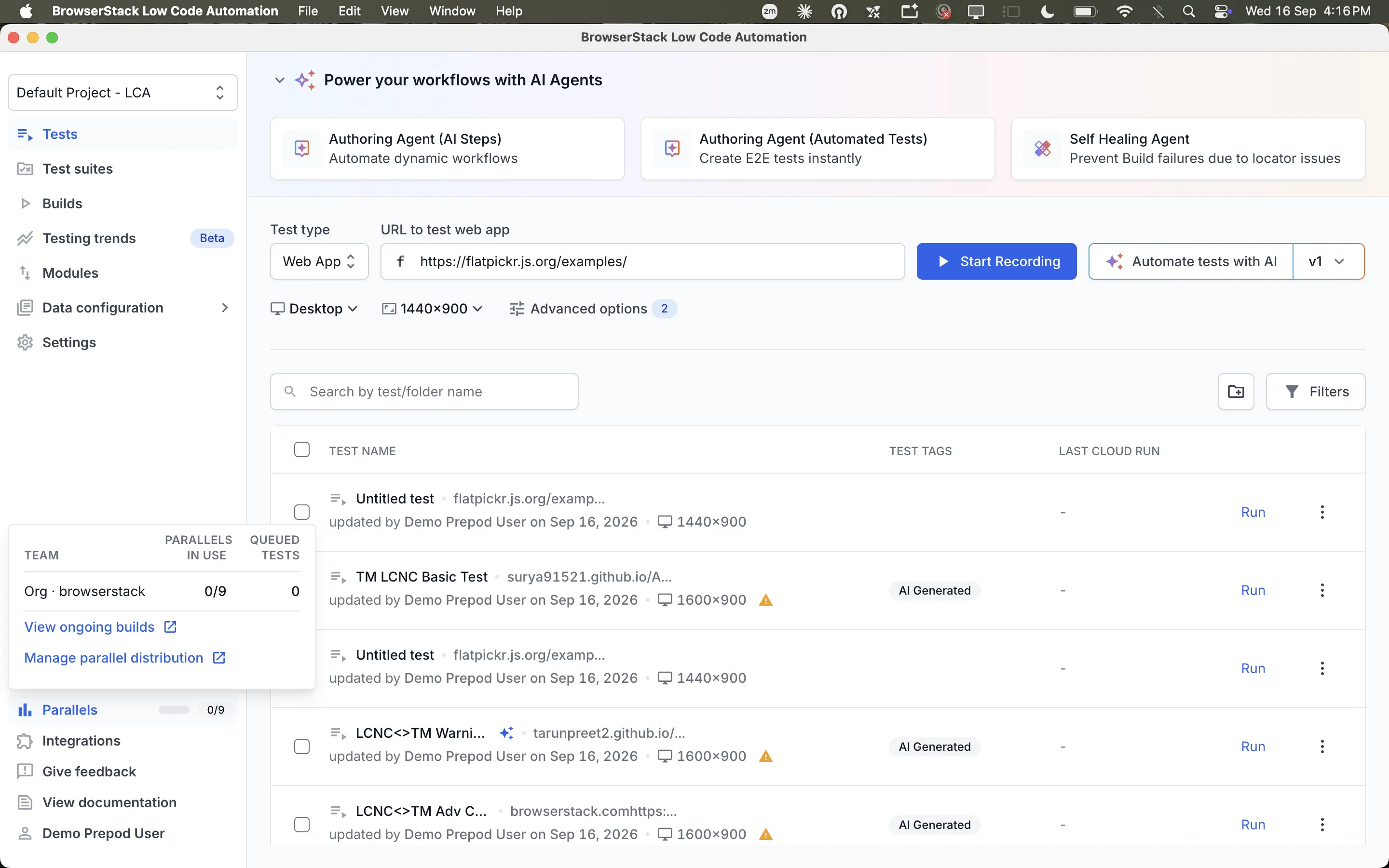
The summary shows the following details:
- Team: If you have multiple teams, the summary displays parallel allocations for each team. Otherwise, it shows the allocation for the entire organization. By default, parallels are shared across the organization, teams, and projects. If you assign parallels to specific teams, the page shows each team’s allocation and the remaining parallels available to the organization.
- Parallels in use: The number of parallels currently in use. If all parallels are in use, your build is queued until a parallel becomes available.
- Queued tests: The number of test executions currently running and waiting for a parallel to become available. As running executions finish, queued executions move into available parallels.
Click a link in the summary to act on what you see:
- View ongoing builds to find which builds hold your parallels.
- Manage parallel distribution to see how parallels are split across teams.
Parallels are shared across projects, so a build in another project counts toward the same numbers.
View ongoing builds
You can view only one project at a time in Low Code Automation, so the builds running in your other projects aren’t visible. Click View ongoing builds to open the Build Runs page in Test Reporting & Analytics, which lists the builds running across all your projects. Use the Build Runs page to find the build that holds your parallels. You can then stop that build to free capacity, or wait for it to finish.
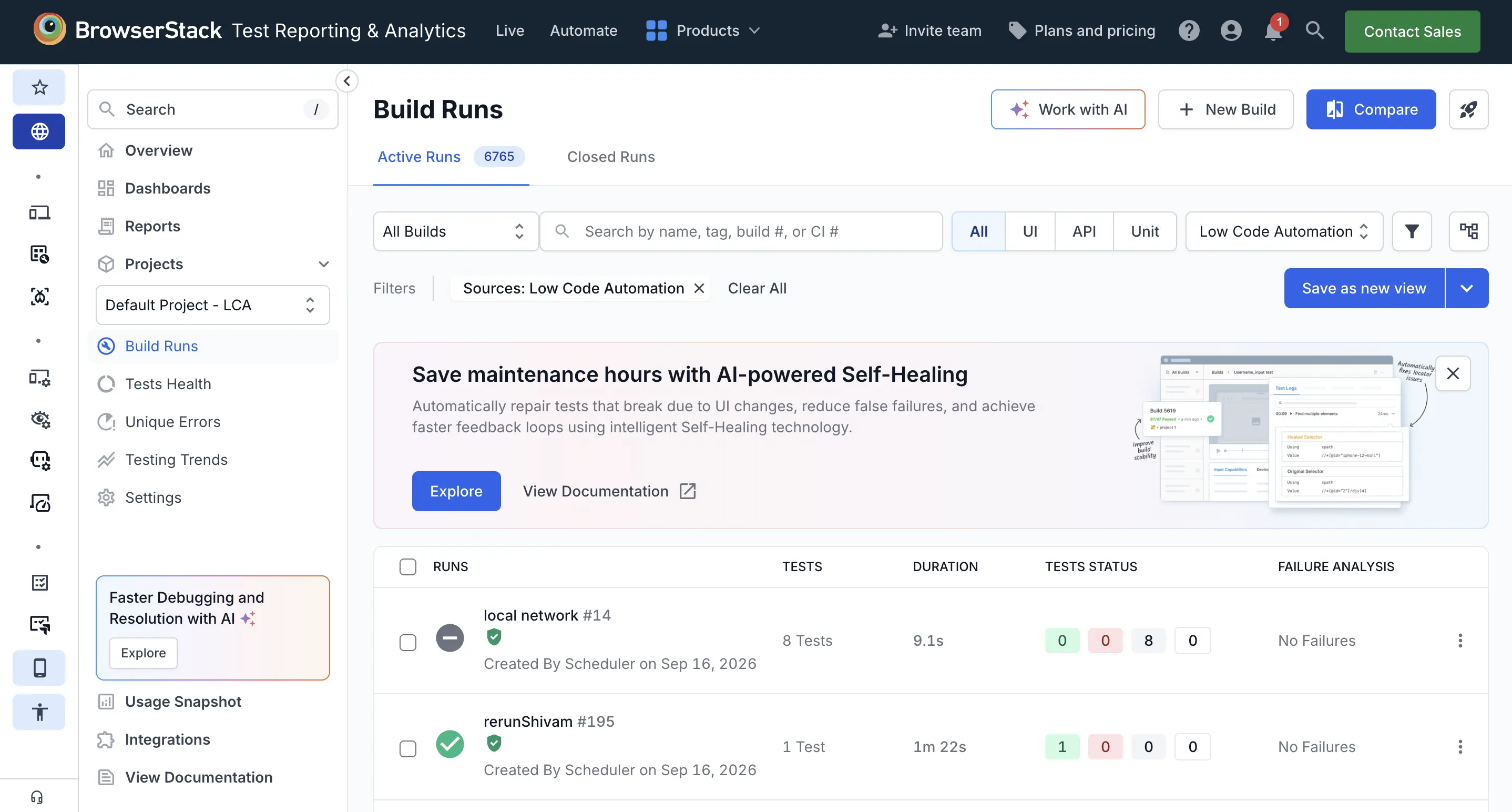
This link appears only if Test Reporting & Analytics is enabled for your account. For more on this integration, see Advanced reporting and analytics.
Manage parallel distribution
Click Manage parallel distribution to open User Management in your BrowserStack account, where you can see how your parallels are split across teams. There, the Owner or a group Admin can assign a dedicated number of parallels to a team, or let the team share the organization’s pool. For the steps, see Allocate parallels in the Enterprise documentation..
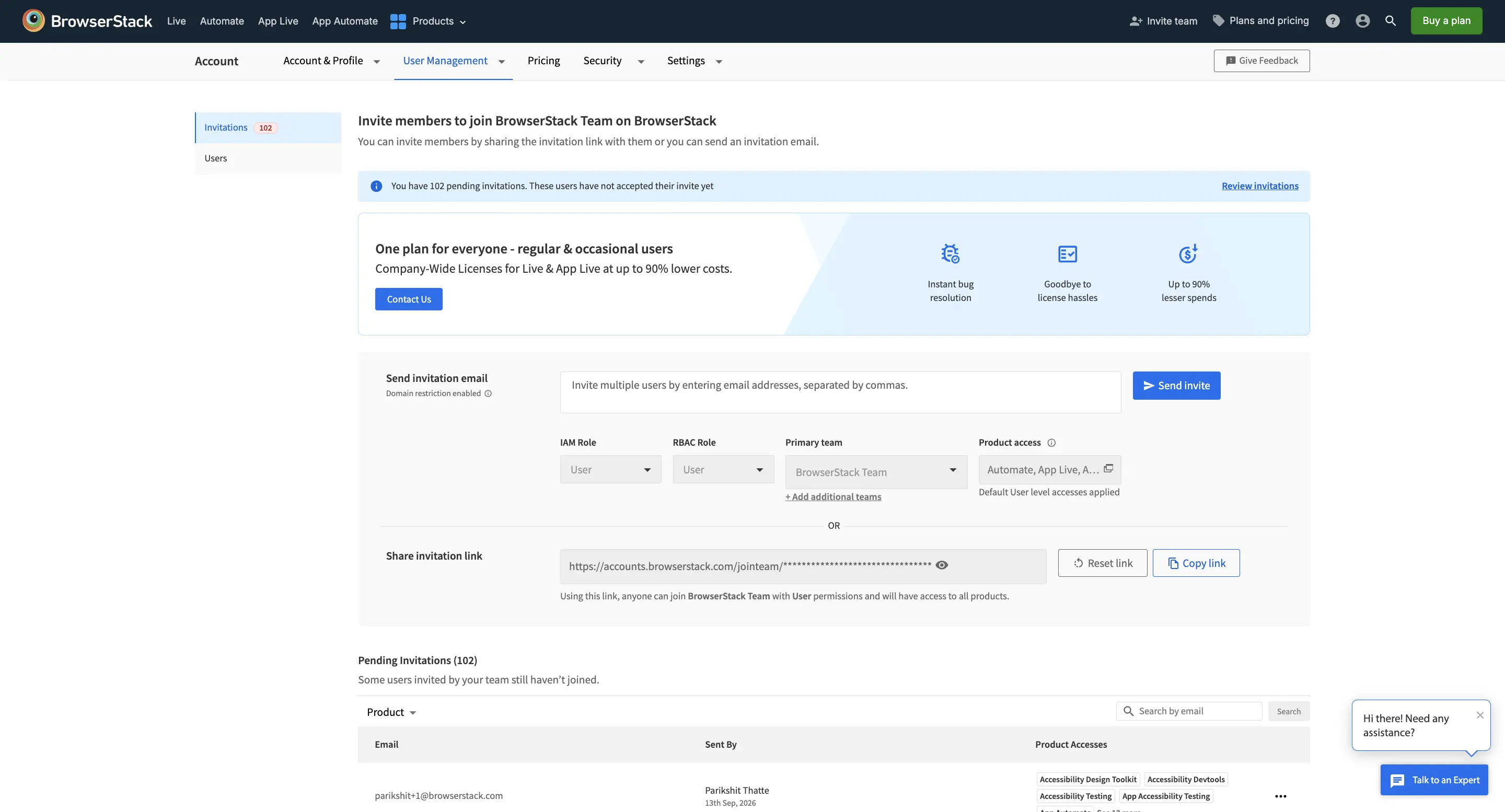
Manage parallel distribution appears only if parallel distribution is active on your license. Parallel distribution is an Enterprise feature.
Related FAQ
We're sorry to hear that. Please share your feedback so we can do better
Contact our Support team for immediate help while we work on improving our docs.
We're continuously improving our docs. We'd love to know what you liked
We're sorry to hear that. Please share your feedback so we can do better
Contact our Support team for immediate help while we work on improving our docs.
We're continuously improving our docs. We'd love to know what you liked
Thank you for your valuable feedback!